
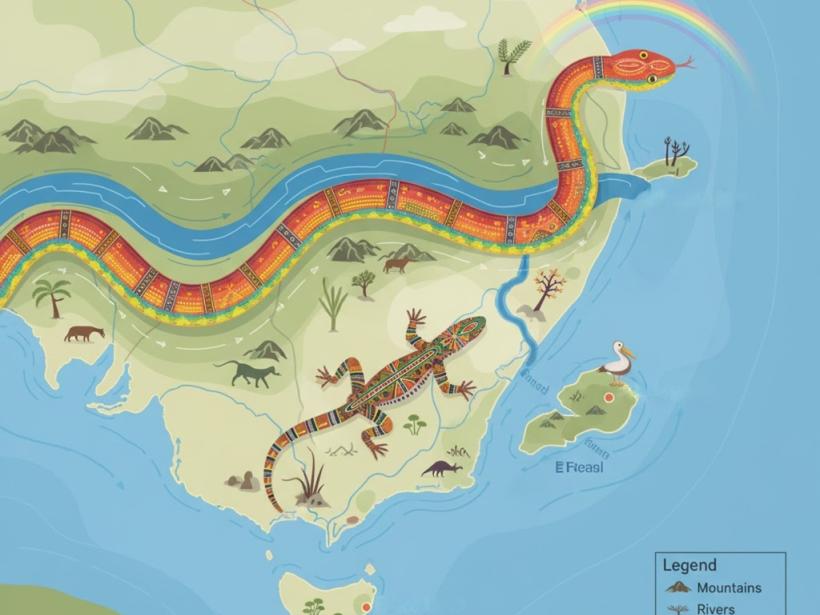

The Rainbow Snake is one of the oldest and most respected figures in Aboriginal mythology. At the beginning, the earth was flat, featureless and grey. No rivers cut through the plains, and no mountains rose above the horizon. Then the Dreamtime brought giant creatures to the land. They moved across the plains, looked like animals, plants, or insects, yet behaved like humans. Their actions shaped the early environment.
Among them, the Rainbow Snake rose above all. His enormous multicolored body pressed into the earth and formed the mountains and the rivers that flow to the ocean. By lifting his tail, he created rainbows that stretched across the sky. His movements guided water and defined terrain. Animals found shelter; plants took root. In essence, the world gained life and form through his actions.
How Do the Bundjalung People Tell a LOCAL RAINBOW SNAKE STORY?
The Bundjalung people tie this creation story to real locations in northern New South Wales. A Bundjalung man, Douglas Cook, shared a LOCAL RAINBOW SNAKE STORY with Jolanda Nayutah. She worked at the Aboriginal Institute in Lismore and recorded his words.
In this account, Rainbow Snake acted in a way too serious to explain openly. A local clever man called Goanna to chase Rainbow Snake away. Only Goanna held enough strength to confront him. Their journey moved across the land, leaving marks that became part of the environment. Their struggle shaped areas around the Richmond River and Woodburn.
How Did the Chase Form Rivers and Islands?
Goanna pursued Rainbow Snake toward the coast. Their movements formed channels and bends along the Richmond River and Evans River. At one point, Rainbow Snake turned and bit Goanna. Goanna stopped eating herbs to heal himself. Once ready, he continued the chase.
Snake reached Evans Head. When he moved, he made a small island in the river, now called Pelican Island. Later, he reached the ocean and made himself into an island to hide. Goanna lay facing the sea, waiting for Snake to return. The land today carries these stories; the rivers, islands, and coastlines remain reminders of their actions.
Why This Story Holds Significance Today
The narrative connects landforms to culture and memory. It explains how the rivers that flow to the ocean and places like Evans Head gained meaning. It shows how oral history preserves identity, law, and knowledge of the country.
For learners, it presents Aboriginal mythology through vivid examples of terrain and life. For scholars, it shows how stories record environmental change and human experience. Most importantly, it honors the Bundjalung people and their lasting connection to the land.
- Richmond River: formed by the chase
- Pelican Island: created by Snake’s movements
- Evans Head: witness to the story
Every place carries memories. Every river bend tells a story. The Rainbow Snake and Goanna remain present in the environment, shaping how people understand the world.