When is the cheapest time to book a stay in Italy?
Late spring and early autumn deliver the best combination of mild weather and lower prices. Aim for April to mid-May or late September through October. In these shoulder months, many hotels and agriturismi drop their rates by 30 to 50 percent compared with the peak summer weeks. You also avoid the crushing crowds that push up demand in July and August.
Booking 4 to 8 weeks before your arrival tends to catch the sweet spot. Properties have usually released their seasonal pricing by then but have not yet sold out the mid-range rooms. For an April trip, start watching prices in February. For an October stay, check listings in late August. Last-minute deals do appear in cities like Rome or Florence outside school holidays, but in small Tuscan or coastal towns the best value rooms go early.
Avoid the Italian school break around Easter, Christmas week and the entire month of August when coastal and lake districts operate at full capacity and full price. If your dates are flexible, a Tuesday or Wednesday check-in often costs less than a Friday arrival. Monday departures can also open up a slightly cheaper rate band on some smaller booking platforms.
Which booking platforms give the best value?

Booking.com tends to offer the widest choice in Italy, from family run pensione to city apartments, and its filters for free cancellation are genuinely useful if your plans might shift. The displayed price usually includes taxes and service charges, so you see a figure close to what you will pay.
Airbnb can work well for a week in a Tuscan village or when you need a full kitchen, but the cleaning fee and service charge added at checkout often make a two night stay more expensive than a hotel. Hostelworld remains the go to for dorm beds and private rooms in hostels, and its review system gives a clear picture of atmosphere and cleanliness.
Aggregators such as Trivago let you scan several platforms at once, which saves time when you want a quick sense of the price range in a town. After you find a property you like, check the hotel’s own website. Small Italian hotels sometimes list a direct booking discount or include breakfast that the big platforms leave out.
- Use Booking.com for flexible cancellation filters and transparent total pricing on short hotel stays.
- Check Airbnb for longer stays where a kitchen and local host tips offset the added service fees.
- Rely on Hostelworld for hostels and budget private rooms, especially for solo travellers wanting a social vibe.
- Scan Trivago or Kayak to compare headline prices across multiple platforms in one view.
- Visit the property’s own website after you find it on a big platform, as direct rates can be lower.
- Read recent reviews on the platform you book through, not just the overall score, to catch any new issues.
What is an agriturismo and how do you find a good one?
An agriturismo is a working farm that takes paying guests, a style of stay protected by Italian law. The farm must earn most of its income from agriculture, not from tourism, so you are bedding down on a genuine property that produces wine, olives, fruit or livestock. Regions such as Tuscany, Umbria and Puglia have the highest concentration, though you will find them in every corner of the country.
Most agriturismi include a breakfast built around what the farm makes, and many serve an optional dinner for a set price. The arrangement suits families because kids can roam safely and meals are often eaten at shared tables. A week in a restored stone farmhouse with a pool can cost less than a city hotel, especially if you book direct.
Dedicated sites like Agriturismo.it list thousands of properties with filters for pools, cooking classes and wheelchair access. Before you book, check whether meals are included or cost extra, and confirm the pool is open in the month you plan to travel. Photos of the kitchen and bathroom tell you more about the real standard than a shot of the sunset over the vines.
Are hostels a decent option for older travellers or couples?

A private room in a well-run Italian hostel often beats a tired two-star hotel on price, location and cleanliness. The old image of a 20-bed dorm full of backpackers no longer matches what many properties actually offer. Search Hostelworld or Booking.com with the filter set to 'private room' and 'ensuite bathroom', and you will see options across Rome, Florence and smaller cities that feel closer to a boutique guesthouse than a youth hostel.
Chains like Ostello Bello have shifted the model deliberately. Their properties in Milan, Como and elsewhere give you a private double with a proper mattress, blackout curtains, free breakfast and a rooftop terrace, all for a rate that sits well below nearby hotels. You share the kitchen and lounge with other guests, but you keep your own quiet space at night. Couples who want a social dinner without a noisy dorm get exactly that balance.
Look for these practical signs of a hostel that suits older travellers:
- A stated quiet hours policy, usually from 11pm, enforced by staff.
- Private rooms listed first on the property page, not buried after the dorms.
- Recent guest photos showing a proper door, reading lights and a chair, not just a bunk.
- A kitchen you can use, which cuts your meal costs noticeably over a week.
- Reviews from guests who mention travelling as a couple or visiting for work.
How do you spot a real seasonal discount from a fake one?

You can verify a genuine low-season rate in Italy in a few minutes by checking the price history. Start by setting a price alert on Google Hotels for the property you are eyeing a couple of months before you plan to book. When a discount appears, open the calendar and look at the same room type for the same days of the week one month later. If the later dates are priced 20-30 percent lower than the peak summer weeks, you are looking at a real seasonal drop, not a manufactured deal.
Ignore urgent onsite messages like 'only 1 room left' or 'booked 4 times today'. These are marketing triggers and tell you nothing about whether the rate is fair for that time of year. A family-run pensione in Rimini drops its prices in October because demand falls, not out of a sudden burst of generosity.
- Set a Google Hotels price alert a few weeks before you intend to book and watch the trend line.
- Check the same property for identical days of the week a month later to confirm the low season pattern.
- Expect a genuine off-peak discount of 20 to 30 percent, not a dramatic 70 percent slash.
- Ignore countdown timers and low stock warnings, which are common on large booking platforms.
- Cross check the rate on the property’s own website, where small hotels often list their real seasonal tariff.
Can you negotiate a lower rate directly with a small hotel?
Family-run pensione and small B&Bs often welcome direct email enquiries because they avoid the 15-20 percent commission charged by large booking platforms. A polite message stating your exact dates and asking for a better direct-booking rate can work, especially outside peak season. Hoteliers in smaller towns and rural areas tend to be more flexible than city properties with high year-round occupancy.
Mentioning that you noticed the property on a booking site shows you have done your research without threatening to undercut them publicly. For stays of five nights or more, ask specifically about a long-stay discount. Simple English is fine, though a few lines of Italian in your opening email show respect and often get a warmer reply.
Keep the tone friendly and direct. State your preferred dates, the number of guests and the room type you are after, then ask plainly if they can offer a rate lower than the one listed online. Don't haggle aggressively. Small Italian hosts value courtesy and a personal connection over a hard bargain.
Frequently asked questions
Is it cheaper to book accommodation last minute in Italy?
Rarely in popular cities like Rome or Florence, where good budget options fill early. In rural areas or smaller towns, you might snag a last minute apartment discount on Booking.com, but do not count on it in peak summer.
What does a budget private room typically cost outside the big cities?
In smaller towns and the south, a clean private double room in a B&B or agriturismo can be found for well under AUD 120 a night in the shoulder season. Prices rise sharply in Milan, Venice and the Amalfi Coast.
Are monastery stays still a thing for budget travellers?
Yes, many convents and monasteries in Rome, Florence and Assisi offer simple, quiet rooms to travellers of any faith. They often have a curfew and basic furnishings. Book through a specialist site like MonasteryStays.com, not a regular hotel platform.
Should I worry about the tourist tax in my budget?
Yes, nearly every Italian city charges a tassa di soggiorno per person per night, usually AUD 2 to 8, paid in cash at check out. It is rarely included in the online price, so factor it into your nightly total.
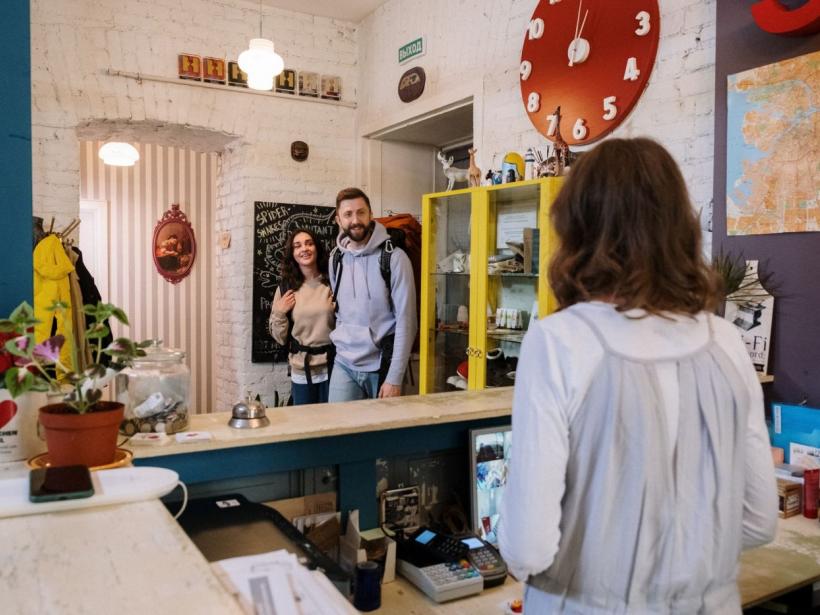
Photo: cottonbro studio, Pexels (Pexels License)