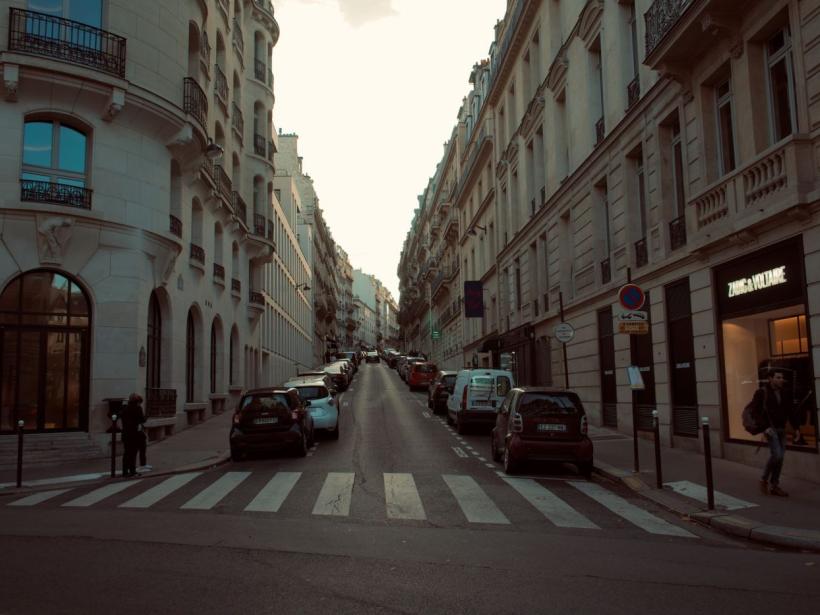
Which arrondissements are quietest at night?
The 5th, 6th, 7th and 16th arrondissements are usually the calmest after dark, with few late-night venues and steady residential foot traffic. The streets around Gare du Nord and Barbès in the 10th and 18th are busier and louder late into the night.
The street matters more than the arrondissement. A quiet block can sit two corners from a rowdy strip, so judge the exact address on a map before you commit.
- Check the nearest metro exit and whether it is lit and staffed at night.
- Look for a mix of homes, a bakery and a small supermarket on the same block.
- Trace the walk from the station to the door after 22:00.
- Note any bar or fast-food outlet directly below the flat.
Quiet does not always mean safer. A well-lit street with people around often feels more comfortable than an empty one.
What should I check before booking?

Look at the exact street on Google Street View before you pay a deposit, then check the same address on a map at night. Look at the ground floor of the building: lit windows, shutters that close properly and a locked main door with a digicode tell you more than any listing photo. A building entry code is normal in Paris, so ask the host whether the code changes and who else holds it.
Arrive in the evening if you can. Foot traffic at 10pm is the clearest signal of a street that stays watched, and a metro entrance within 300-400 m keeps the walk home short after dark. Bars and takeaways on the same block mean noise until 2am, so check what sits directly under the flat.
- Street lighting that works on both sides of the road
- People still walking at 10pm, not an empty canyon
- Nearest metro entrance within 300-400 m
- Ground-floor windows with working shutters and no easy ledge
- A main door with a digicode and a second locked door inside
- Bars and takeaways on the block, and their closing time
How do transport links affect safety?
Good transport links make a neighbourhood feel safer because they keep streets busy and give you a simple way home after dark. In Paris, check how far you walk from the métro or RER entrance to your door, not just how close the station looks on a map.
A direct line to the centre reduces the number of changes late at night, when empty platforms and long corridors feel less comfortable. Night buses (Noctilien) run when the métro is closed, so find the nearest stop and confirm it serves your route. Taxi ranks near major stations are staffed and well lit, and a booked ride is easier than hailing one on a side street.
At midnight, a well-lit boulevard with open cafés and passing traffic feels very different from a quiet side street two blocks away. Walk your actual route once in daylight, then again after dark if you can, and note the lighting, foot traffic and open businesses along the way.
- Measure the walk from the station exit to your building, not the station name.
- Check whether one direct métro or RER line reaches the centre without changes.
- Find the nearest Noctilien stop and confirm it runs on your nights out.
- Note taxi ranks and lit main roads near the address.
- Compare the busy boulevard route with the quieter side street at night.
Which local amenities signal a well-used street?

A street with a bakery, a pharmacy and a small supermarket stays busy from early morning until well after dark, and that steady foot traffic does more for how safe you feel than any fence or intercom. Look for a boulangerie opening around 6.30am, a pharmacie with its green cross lit, and a marché with set trading days. These are the shops locals use daily, so the pavement rarely empties.
Cafés and tabacs matter too. A terrace with customers at 9pm tells you the street is watched, while a row of shuttered shops and rolled-down metal grilles feels far worse after dark, even in a good area. Walk the block once in the evening before you commit.
- Check that the pharmacy and bakery keep normal hours, not just morning trade.
- Note the market days and whether stalls pack up early or run into the evening.
- Look for a tabac or newsagent, a sign of regular local custom.
- Count how many shopfronts sit empty or boarded up.
- Visit after 9pm to see whether the street still has people about.
How do I read reviews and local advice?
Reviews help most when you look for patterns rather than single verdicts. Sort by newest first, then look for the same street detail appearing three or four times: noise after midnight, a poorly lit lane, a locked building entrance. One angry review tells you about one guest. A repeated theme tells you about the street.
Ask the host direct questions before you book, and keep them specific. Which floor does the flat sit on, is there a lift, does the front door open straight onto the pavement or into a courtyard, and is there a coded entrance? Ask what the immediate block is like after dark and whether a nearby bar or takeaway stays busy until late. A host who answers in detail is also a host you can call if something goes wrong.
- Read reviews for the street, not the apartment: noise, lighting, entrances.
- Check the listing on a map and look for lit main roads and Metro entrances nearby.
- Ask the host two or three precise questions and note how quickly they reply.
- Use official city and police information for crime figures, not forum rumour.
- Treat a single dramatic review as one person's bad night, not the neighbourhood's character.
What changes with the seasons?

Paris stays light until about 10pm in June and July, so streets near the Seine and around Montmartre stay busy well past dinner. That foot traffic makes an evening walk feel comfortable, but it also draws pickpockets to crowded terraces. Winter is the opposite: sunset arrives before 5pm in December, and quieter residential streets empty quickly.
August changes things again. Many Parisians leave for the coast, so bakeries and cafés in residential arrondissements close for two to four weeks, and some streets feel deserted after dark. Check whether nearby shops stay open before you book a stay in a quiet area that month.
- Carry a bag you can close and keep it in front of you in summer crowds.
- Plan evening walks on lit, busy streets once clocks change in late October.
- Ask your host which local businesses close in August.
- Check sunset time for your travel dates before booking a late arrival.
What everyday habits help once I arrive?
Keep your bag zipped and worn across your body on the metro, and hold it in front of you when the carriage is crowded. Move away from the doors with your phone in your pocket, because a phone in your hand at an open door is the easiest thing to grab as the train stops.
At night, walk on lit main streets even if the back route is shorter, and cross to the busier side if a stretch feels empty. Your own judgement of a street matters more than any list: if a lane is dark, quiet and has no open shopfronts, turn back.
- Zip bags before you enter the station, not on the platform.
- Keep phones out of sight near carriage doors and ticket gates.
- Choose the lit main street over the short cut after dark.
- Trust your own judgement and change route without apology.
Frequently asked questions
Is the 18th arrondissement safe for tourists?
Most of it is fine, especially around Montmartre and Lamarck, which stay busy into the evening. The streets near Barbès and the northern edge feel rougher after dark, so check the exact street rather than the district.
Should I avoid staying near Gare du Nord?
It is handy for early trains, but the streets right outside are busy and noisy at night. If you stay there, choose a hotel on a lit main road and keep late walks short.
Is it safer to stay in the centre?
Central arrondissements are generally well lit and busy late into the evening, which many visitors find reassuring. They are also more expensive, so weigh the trade-off against a quieter outer district with a direct metro line.
How can I tell if a street is safe before I book?
Ask your host what the street is like after 10pm and whether there are bars or takeaways nearby. Check the walking route from the nearest metro on a map and look for lit main roads rather than dark side streets.
Photo: Raul Albright, Pexels (Pexels License)