
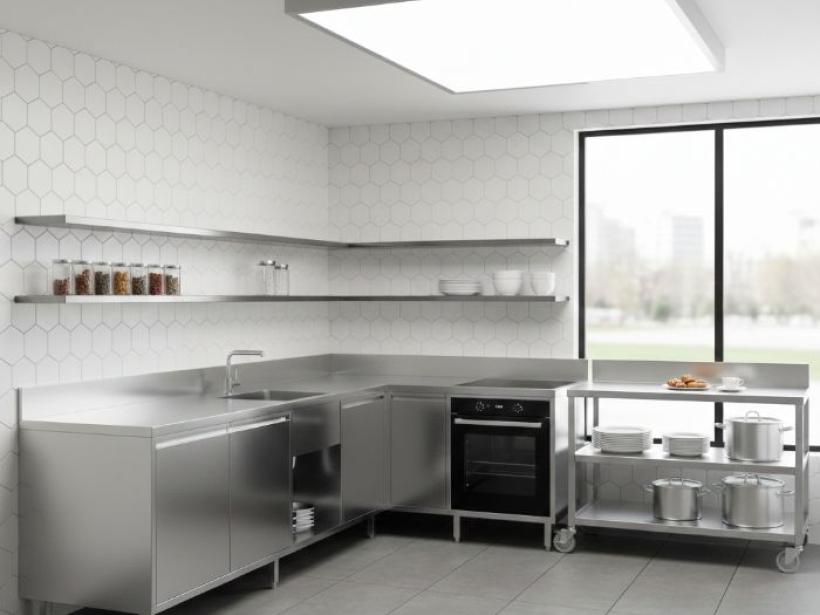

Storage decisions in a commercial kitchen rarely get much attention until something goes wrong — a cross-contamination flag on an inspection, a shelf that starts sagging under load, or a prep station that's cluttered because there's nowhere else to put things. Wall-mounted shelving solves most of this by getting items up off counters and floors entirely, and stainless steel is the material that holds up best under the conditions a working kitchen actually creates.
Why Stainless Steel Holds Up Where Other Materials Don't
A stainless steel shelf keeps utensils, ingredients, and small equipment off the work surface without introducing the problems that come with cheaper alternatives. Plastic shelving tends to warp under sustained heat exposure near ranges and ovens. Coated steel eventually chips, and once the coating breaks, the exposed metal underneath becomes a sanitation problem rather than a solution.
What stainless steel does better:
- A non-porous surface that doesn't harbor bacteria the way seams in coated or plastic shelving can
- Genuine resistance to corrosion from steam, moisture, and frequent detergent exposure
- Vertical storage that reclaims wall space in kitchens where floor and counter room is already tight
- A surface that keeps its shape under years of daily loading and unloading
What to Actually Check Before Buying
Picking a wall-mounted shelf starts with the wall itself, not the shelf. Mounting points need to match the wall type, and load capacity needs to reflect how the shelf will actually be used — a shelf near a prep station handling heavy stockpots needs a different spec than one holding lightweight dry goods.
Worth checking before purchasing:
- Rated weight capacity against realistic daily loads, not just the maximum
- Mounting stability and compatibility with the wall type it's going into
- A surface finish that's genuinely easy to wipe down between shifts
- Shelf depth matched to what's actually being stored, since oversized shelving just wastes wall space
It's also worth confirming the product meets local health code requirements before ordering, since standards vary slightly by jurisdiction and a shelf that doesn't comply is a wasted purchase.
Which Type Fits Which Job
| Shelf Type | Typical Use Case | Key Advantage |
|---|---|---|
| Standard wall shelf | General kitchen storage | Balanced capacity and easy access |
| Heavy-duty wall-mounted shelf | Equipment and bulk storage | Higher weight support |
| Multi-level wall-mounted shelving | High-volume prep zones | Maximizes vertical storage |
Standard shelves work well for condiment stations and everyday items. Heavy-duty versions are built for mixers and bulk containers near prep sinks, where weight adds up fast. Multi-level shelving suits high-volume lines, where stacking tools vertically keeps the actual work surface clear instead of cluttered.