
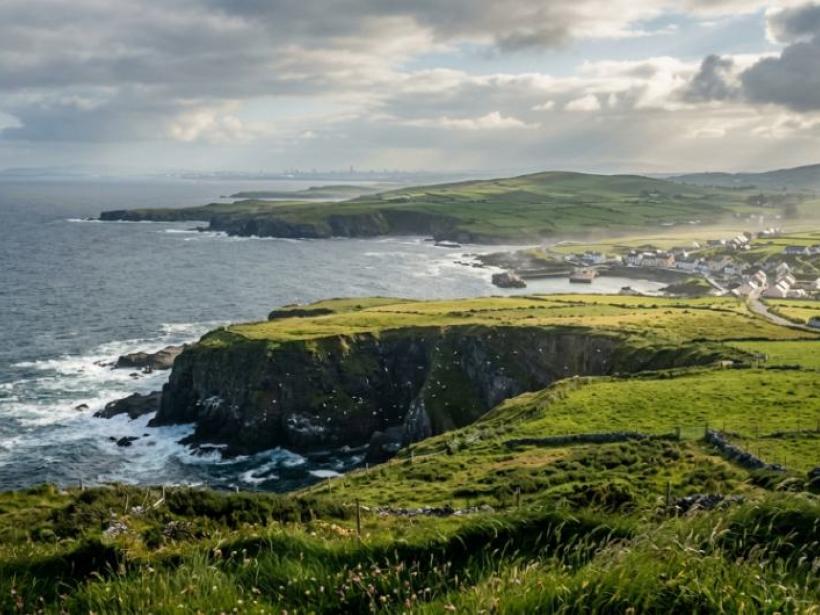

Traveling to Ireland means immersing yourself in rugged Atlantic coastline, ancient monastic ruins, and one of Europe's most distinctively green landscapes. The island's compact size means you can move between wild countryside and lively cities in a matter of hours — but knowing when to go makes a real difference to your experience.
When Should You Visit Ireland?
The best times to visit Ireland are May and September. These shoulder months offer a reliable balance of mild temperatures, manageable crowds, and better value for accommodation compared to the peak summer months of July and August. That said, Ireland's famously unpredictable maritime climate means you should pack waterproofs regardless of when you go.
Ireland's Weather by Season
Ireland has a temperate climate with relatively small swings between seasons — a result of the warming Gulf Stream and prevailing Atlantic winds. Extremes are rare: summers rarely scorch, and winters rarely freeze. What you will get in any season is changeability. Locals half-jokingly call it "four seasons in a day."
Spring (March–May) — 8–15°C
Wildflowers bloom, lambs appear in the fields, and the landscape earns its "Emerald Isle" reputation. May in particular offers some of the longest daylight hours of the year and, statistically, the best odds for dry spells. Attractions are open but not yet overwhelmed. This is widely regarded by travel experts and local guides as the single best month to visit.
Summer (June–August) — 15–20°C
Peak season, full stop. Daylight stretches until 10 pm in June, making it ideal for road trips, coastal walks, and outdoor festivals — including the Galway International Arts Festival in late July. Everything is open and operating at full capacity. The trade-off is fully booked accommodation, higher prices, and busy roads, particularly along the Wild Atlantic Way. Book at least three to six months in advance if visiting in July or August.
Autumn (September–October) — 10–15°C
Many experienced Ireland travelers consider autumn the most rewarding season. September in particular tends to bring settled "Indian summer" weather, while the summer crowds have largely cleared. Landscapes turn golden, food festivals and traditional music sessions fill the calendar, and you'll often have major sites more to yourself.
Winter (November–February) — 4–8°C
Short days, frequent rain, and limited hours at rural attractions. However, cities like Dublin, Galway, Cork, and Belfast come alive with Christmas markets in December, and January/February offer the lowest accommodation prices of the year. Many hotels in rural areas close for the season, so base yourself in a city if you visit in winter.
Season at a Glance
| Season | Avg. Temp | Price Level | Best For |
|---|---|---|---|
| Spring (Mar–May) | 8–15°C | Moderate | Wildflowers, hiking, St Patrick's Day |
| Summer (Jun–Aug) | 15–20°C | Premium | Festivals, long days, beaches |
| Autumn (Sep–Nov) | 10–15°C | Moderate | Foliage, food festivals, quieter sites |
| Winter (Dec–Feb) | 4–8°C | Budget | City breaks, Christmas markets, pubs |
Accommodation Costs
Dublin is one of the more expensive cities in Western Europe for accommodation, and prices vary significantly by season.
For mid-range hotels in Dublin city centre, expect to pay roughly €120–160 per night in the shoulder seasons and €200–250 per night in peak summer (July–August), based on current booking platform averages. Budget hostels start well below €100, while luxury hotels regularly exceed €300–400 per night in high season.
The practical takeaway: shoulder season visitors typically save around 20–30% on accommodation compared to peak summer rates. If you want to stretch that saving further, our guide to budget travel tips covers practical strategies that apply across most destinations. The cheapest window for Dublin hotels is January and February, where mid-range rooms can be found from around €80–100 per night.
Outside Dublin, accommodation in towns across Kerry, Galway, and Donegal is generally less expensive, though popular spots along the Wild Atlantic Way book up quickly in summer.
Popular Tours and Routes
Most guided tours of Ireland focus on one of two themed corridors: the Wild Atlantic Way (running 2,500 km along the western coastline from Donegal to Cork) or the Ancient East (covering Ireland's monastic and Norman heritage inland and along the east coast). For independent travelers, a self-drive road trip combining both is very achievable in a week. If you're weighing up guided packages vs. going it alone, our 2026 guide to selecting the best travel packages walks through the key questions to ask before booking.
Most popular tour circuits:
- The Ring of Kerry in County Kerry — classic lake and mountain scenery, popular but busy in summer
- The Dingle Peninsula — less crowded than Ring of Kerry, with dramatic cliffs and Ireland's best-preserved Irish-speaking region
- The Causeway Coastal Route in Northern Ireland — includes the Giant's Causeway and the famous rope bridge at Carrick-a-Rede
A growing travel trend for 2026 is "slow travel" — spending three or more nights in one region rather than rushing island-wide. This approach suits counties like Donegal and Clare particularly well, where hidden beaches and local culture reward those who slow down.
Tours vs. self-driving: Guided tours offer the advantage of historical context and remove the stress of navigating Ireland's often narrow rural roads (and left-side driving). Self-driving gives you the freedom to stop wherever you want and reach more remote locations on your own schedule.
Spotlight: Slieve League Cliffs, Donegal
If your itinerary includes only one set of cliffs, consider Slieve League over the Cliffs of Moher. Rising to 601 metres (1,972 feet) above the Atlantic, they are nearly three times the height of the Cliffs of Moher (which peak at around 214 metres), making them among the highest accessible sea cliffs in Europe. Despite this, visitor numbers remain a fraction of the Moher crowds.
A guided hike along the Pilgrims' Path to the summit is manageable for fit walkers, though the exposed ridge at One Man's Pass requires a head for heights and should not be attempted in poor visibility or bad weather. If long-distance hiking appeals to you, our guide on trekking the Inca Trail is worth reading for comparison.
Getting Around Dublin: The Leap Visitor Card
For visitors spending time in Dublin, the Leap Visitor Card is the most practical way to use the city's public transport network. It offers unlimited travel on Dublin Bus, Go-Ahead Ireland bus services, the Luas tram, the DART coastal rail, and Commuter Rail services within the city.
Current prices (confirmed by the official Leap Card website):
- 1 day (24 hours): €8
- 3 days (72 hours): €18
- 7 days (168 hours): €24
The card activates on your first tap, not on the day of purchase, which is a useful flexibility. It can be bought at Dublin Airport (Terminal 2 Spar) or at various city-centre outlets, and online in advance of your trip. Note that it is not valid on private airport coaches such as Aircoach or Dublin Express, but it does work on Dublin Bus routes to the airport.
FAQ: Planning Your 2026 Trip
What's the cheapest time to visit Ireland?
January and February offer the lowest accommodation prices (excluding any major festival periods like TradFest Dublin in late January), with rooms in major cities sometimes available from around €80–100 per night. The trade-off is short daylight hours and limited access to rural attractions.
Do I need a car?
Not for a Dublin-only trip, where the Leap Visitor Card covers your transport needs. For exploring rural Ireland — Donegal, Kerry, Clare, or Connemara — a hire car is strongly recommended. Roads in western counties can be narrow and are not always well served by public transport.
How far in advance should I book?
For summer travel (June–August), book accommodation three to six months ahead, particularly in popular areas like Killarney, Galway, and Dingle. For shoulder season travel, one to two months is generally sufficient outside of festival weekends.
Are digital maps helpful for rural driving?
Yes — essential, in fact. Rural roads in counties like Donegal and Sligo can be unsigned or confusing for visitors unfamiliar with local geography. Apps like Google Maps and Maps.ie work well, though mobile signal can be patchy in remote areas. Download offline maps before heading out.
Is Ireland safe to travel solo?
Ireland consistently ranks as one of the safer destinations in Europe for solo travel. Cities like Dublin, Galway, and Cork have well-established hostel scenes, active pub cultures that tend to be sociable, and reliable public transport. Solo travelers on a tight budget often find hostels in the city centre an excellent base, with day trips to the countryside available via organised tours if hiring a car isn't practical.
How do I capture and remember the trip?
Ireland's landscapes and local characters tend to leave a strong impression. If you're still deciding how to document it, our piece on travel journal vs souvenirs might help you decide before you pack.
All prices current as of May 2026. Accommodation rates are indicative averages and will vary by property, timing, and booking platform. Always verify transport fares and card prices directly with Transport for Ireland (transportforireland.ie) or the Leap Card website (leapcard.ie) before travel.