
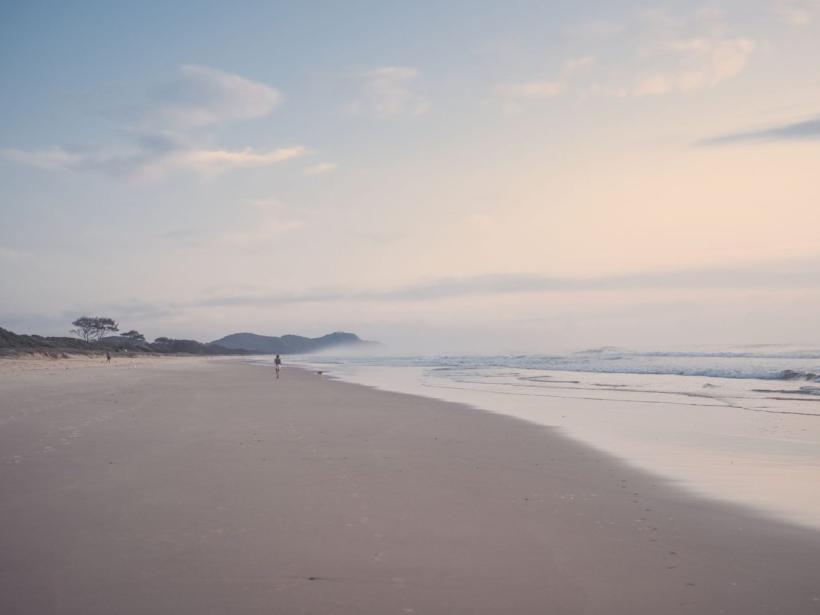
What is the one walk every visitor should do first?
The Cape Byron walking track is the standout walk, a 3.7 km loop that takes you through rainforest, across clifftops and up to the lighthouse. Start at the Captain Cook lookout car park near the Byron Bay Surf Club and follow the signposted track clockwise. The full circuit takes about two hours at a relaxed pace, with plenty of stops for photos.
Along the way you pass Wategos Beach, the most easterly point of the Australian mainland and the whitewashed Cape Byron Lighthouse. Between May and November the headland is one of the best land-based whale watching spots in New South Wales. Early morning walkers often spot wallabies grazing near the track before the crowds arrive.
Parking at the Cape Byron Lighthouse car park costs $10 per hour and fills quickly after 9 am. Leave the car near the surf club and walk up, or park along Lighthouse Road where spots are free but limited. Wear a hat and take water, the exposed sections get hot even on mild days.
Which Byron Bay beaches suit swimming and which are better for surfing?

Main Beach stays calm and shallow close to shore, so families and casual swimmers head there first. The surf club patrols the central section during the warmer months, and the northerly aspect blocks most of the swell. You get clean sand, picnic tables under the Norfolk pines and a gentle slope into the water, which suits toddlers and anyone who just wants a quiet dip.
The Pass and Tallow Beach draw surfers for opposite reasons. The Pass peels a long right-hander over a sandy bottom and works best on a mid-tide with light offshore winds, though the take-off zone gets crowded by sunrise. Tallow Beach faces south-east and picks up bigger open-ocean swell, so it offers punchier waves and far fewer people; rips move quickly along the middle section and swimmers should stay between the flags when the lifeguard tower is staffed in summer.
Wategos Beach sits in the most protected corner of the bay and is the pick for a long, lazy swim. The water here is clear and often flat, the grassy bank behind the sand gives full shade from mid-morning, and the north-facing aspect means the surface stays glassy well into the afternoon. Key differences at a glance:
- Main Beach: best for families and wading, patrolled in summer, plenty of shade under the pines.
- Wategos Beach: sheltered swimming in flat, clear water, shaded lawn area, no surf patrol.
- The Pass: consistent longboard wave, crowded line-up, suits intermediate and advanced surfers.
- Tallow Beach: powerful beach break, quiet outside the flags, strong rips require experience.
- Clarkes Beach: small cove between Main Beach and The Pass, gentle waves, good for learners on softboards.
- Little Wategos: rocky cove east of the lighthouse, no sand at high tide, only for confident swimmers on calm days.
What markets run in and around Byron Bay and on which days?
Byron Bay and its hinterland villages hold regular markets where local growers, bakers and makers sell their produce and crafts. The main markets run on fixed days each week or month, so you can plan a visit around them. Parking is tight, so arrive early or use the shuttle buses some markets run from central spots.
Farmers markets focus on fresh fruit, vegetables, bread, cheese and honey from Northern Rivers producers. The community markets add handmade clothes, jewellery, ceramics and second-hand books to the mix, and nearly every market has a coffee van and a sausage sizzle. Bring a reusable bag and cash, as not every stall has EFTPOS.
- Byron Community Market runs on the first Sunday of the month at Butler Street Reserve. Stalls sell vintage clothing, plants, local art and hot food, with live music all morning.
- Byron Farmers Market happens every Thursday morning at the same Butler Street site. It is the pick for fresh macadamias, sourdough, seasonal fruit and organic vegetables.
- Bangalow Market sets up on the fourth Sunday of the month in the showgrounds just off the main street. Expect bric-a-brac, handmade ceramics, local honey and a relaxed village atmosphere.
- Mullumbimby Farmers Market operates every Friday morning at the Mullumbimby Showground. This is a growers market where you buy directly from the people who planted and picked the produce.
- Mullumbimby Community Market takes over the same showground on the third Saturday of the month. It is larger and more eclectic, with clothing, plants, tools and second-hand goods alongside food stalls.
- Byron Twilight Market runs on Saturday afternoons from October to April in Railway Park. It is smaller than the Sunday market, with a focus on local crafts, live music and dinner from food vans.
How do you plan a day trip from Nimbin to Byron Bay?

The drive from Nimbin to Byron Bay takes about 70 to 80 minutes via Lismore and the Bruxner Highway, then the Bangalow Road through the hinterland. The route through Lismore is the most direct, but many locals prefer the quieter detour through The Channon and Clunes, which adds 10 minutes and winds past macadamia farms and rolling hills. Either way, fill the tank in Nimbin because fuel stops are sparse on the back roads.
Parking in Byron Bay is tight and paid near the main beach. The best all-day option is the Lawson Street car park, a short walk from the surf club and the start of the lighthouse track. It fills by 9 am in summer and on weekends, so aim to arrive early. A free alternative is to leave the car at the Cavanbah Centre sports fields on Ewingsdale Road and walk 20 minutes into town.
A relaxed one-day itinerary:
- Drive from Nimbin by 7:30 am and park by 9 am at Lawson Street.
- Walk the Cape Byron lighthouse loop while the morning light is soft and the track is less crowded.
- Swim and grab a coffee at Main Beach, then wander the shops along Jonson Street.
- Have lunch at a cafe in the Arts and Industry Estate, an easy drive south of the town centre.
- Visit the Byron Community Market if it happens to be the first Sunday of the month, or spend the afternoon at The Pass or Wategos Beach.
- Leave Byron by 4 pm to drive back to Nimbin in daylight, avoiding kangaroos on the hinterland roads at dusk.
What free or low-cost activities work well with kids?

Main Beach rock pools at the base of the Cape Byron headland fill with clear seawater as the tide drops, creating a natural wading area for young children. You can walk there from the town centre in ten minutes, and the pools sit right next to the main patrolled beach so you can move between the two. Bring reef shoes and a bucket, check the tide times on the BOM app, and aim for a low tide that falls in the morning when the sun is not yet at its strongest.
Arakwal National Park runs south from the town along Tallow Beach and has a flat, stroller-friendly walking track through coastal heath and banksia forest. Kids can spot wallabies in the early morning, and the track ends at a quiet stretch of sand where the surf is often too rough for swimming but perfect for running and sand games. The rail trail from Byron to Bangalow is a sealed, car-free bike path past farmland and macadamia groves. You can hire a bike with a child seat or a tag-along in town, ride as far as the kids manage, and turn back whenever you like.
Shorten the lighthouse walk by starting from the Captain Cook Lookout car park instead of the town centre. From there the track is a wide, paved path with handrails on the steeper sections, and you reach the lighthouse in under fifteen minutes. Kids get the clifftop views and the chance to see dolphins without the full loop.
- Main Beach rock pools at low tide, with reef shoes and a bucket for small children
- Arakwal National Park walking track, stroller-friendly and good for early-morning wallaby spotting
- Bangalow rail trail by bike, sealed and car-free, hire a child seat in town
- Shortened lighthouse walk from Captain Cook Lookout, paved path with handrails
- Tallow Beach for sand games and splashing at the edge, no swimming unless patrolled
What is the best season for a Byron Bay visit?
Autumn, from March to May, brings the calmest ocean, daytime temperatures around 22 to 25 degrees and far fewer visitors than summer. The water stays warm enough for a long swim and the holiday crowds thin out after Easter, so you can book accommodation more easily.
Spring, from September to November, is the prime whale watching season. Humpbacks travel north past Cape Byron in September and October, then return south with calves from late October into November. The Cape Byron walking track and Captain Cook lookout give clear views without needing a boat. Beach days are still common, though the water is cooler than in autumn.
Summer, from December to February, brings the warmest water and a lively town atmosphere, but you will share the beaches and cafes with thousands of holidaymakers. Camping and holiday rental bookings fill months ahead, and the main car parks near Clarkes Beach and Wategos are full by mid-morning most days.
Frequently asked questions
Can you swim at all Byron Bay beaches safely?
Main Beach and Wategos are patrolled in summer and generally calm. The Pass has rips near the headland and Tallow Beach is unpatrolled and often rough, so check conditions before entering the water.
How long does the Cape Byron lighthouse walk take?
The full loop from Captain Cook lookout takes about 90 minutes at a relaxed pace. A shorter return walk from Wategos Beach to the lighthouse and back takes around 45 minutes.
Is parking free in Byron Bay?
Most central parking is metered and time-limited. The Cavanbah Centre car park offers all-day paid parking a short walk from town. Some residential streets have free untimed spots but they fill early.
What is the closest market to Byron Bay on a Sunday?
The Bangalow Market runs on the fourth Sunday of each month and is about a 15-minute drive from Byron Bay. It features local crafts, fresh produce and live music in the Bangalow Showground.
Photo: Kate Trifo, Pexels (Pexels License)