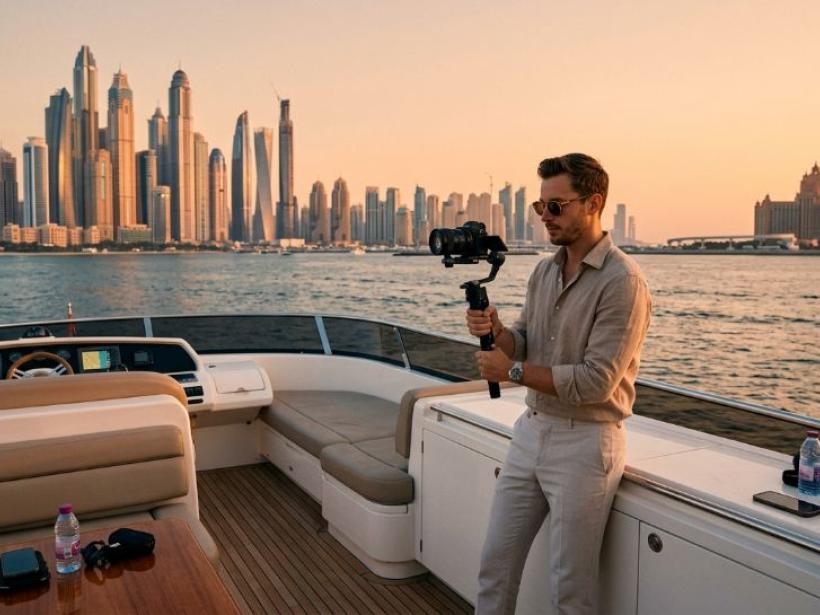

Dubai's skyline has become a reliable backdrop for content creators, and a yacht deck is one of the few vantage points that delivers both movement and scale in the same shot - something a static rooftop or beach location can't match.
Planning the Route Before the Camera
Planning starts with the route, not the camera. A loop past Dubai Marina, out toward Palm Jumeirah, and back gives roughly 20 to 30 minutes of genuinely varied backdrop - towers, the Palm's silhouette, open water - which is more than enough to cut a short-form video without repeating the same frame twice. It's worth telling the captain in advance that filming is the goal; most are happy to slow down, reposition, or hold a course for a specific angle if asked. Creators scouting locations can browse elite yacht rentals in Dubai to check available boats, routes, and time slots before locking in a shoot date.
Getting the Light Right
Light matters more than gear. The hour before sunset remains the most forgiving for skin tones and gives the skyline its most flattering color, but the trade-off is competing boat traffic and other charters angling for the same shot. An early morning slot avoids that entirely and gives flatter, cleaner light for anyone prioritizing a clean background over golden-hour color.
Audio and Permissions
Audio is the detail most creators overlook until it's too late. Wind noise at even moderate boat speed can overwhelm a phone or camera's built-in mic entirely, so anything relying on spoken narration is better recorded separately and layered in during editing. Getting permission for specific shots is worth a quick conversation with the operator before the day, not after boarding - some routes pass close enough to other charters that a captain may need to adjust course slightly, and it's worth asking whether drone use is permitted from the vessel.
Keeping Footage Stable
Stabilization is the one technical note worth planning for - even calm water has enough motion to add unwanted shake to handheld footage, so a gimbal or a simple monopod braced against a rail makes a noticeable difference in the final cut, especially for anything shot at a longer focal length.
Cutting for Different Platforms
Footage from the same charter tends to need different treatment depending on where it's going. Vertical short-form clips benefit from tighter, closer framing since the skyline reads less clearly in a narrow crop, while landscape footage for a longer edit can hold wider shots of the full route without losing impact. Shooting a mix of both orientations during the same charter, rather than choosing one in advance, keeps every option open once editing starts, and it avoids having to re-book a second charter just to cover a format that wasn't planned for the first time out.