
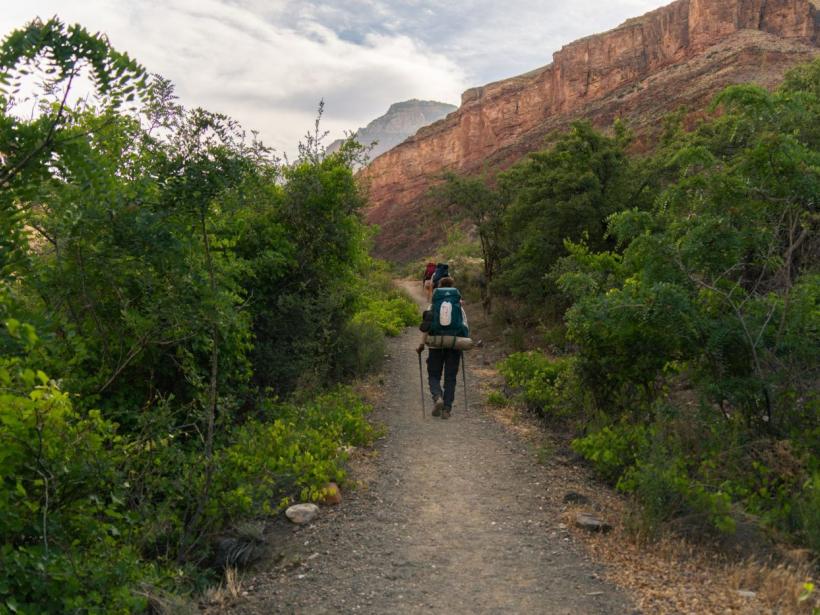
Which national parks give the biggest change of scenery from a city trip?
For a complete change of scene after the concrete canyons of New York, head west to the red rock country of Utah and Arizona or south to the misty Appalachian ridges. Each park listed below swaps skyscrapers for vast geological time, silence, and a pace set by the sun. The entry fee for a private vehicle is USD 35 at all three, valid for seven days, which works out to roughly AUD 55 at current exchange rates.
Late spring and early autumn give you mild daytime temperatures and thinner crowds at the most popular lookouts, while summer demands pre dawn starts to beat the heat and secure a parking spot. Winter brings snow to the rims and a quiet that is hard to find in any city.
- Grand Canyon National Park drops you onto the South Rim at 2100 metres, where the layered bands of the canyon stretch for 277 river miles. The scale is disorienting after a city grid. The best short walk is the paved Rim Trail between Mather Point and Yavapai Observation Station.
- Zion National Park inverts the view: you stand on the canyon floor looking up at 600 metre sandstone walls. The Riverside Walk to the start of the Narrows takes you along the Virgin River on a flat, wheelchair-accessible path, and the cottonwood trees turn gold in late October.
- Great Smoky Mountains National Park, straddling North Carolina and Tennessee, offers a softer, greener contrast. The Appalachian Trail crosses the park, and the Clingmans Dome observation tower gives you a 360-degree view of rolling blue ridges that never feels crowded even on a busy day.
- Bryce Canyon National Park, a half day drive from Zion, sits above 2400 metres. Its hoodoos, thin spires of orange and pink rock, catch the low morning light and the Queens Garden Trail drops you among them in under two hours of easy walking.
Each of these parks requires a flight to a regional airport such as Flagstaff, Saint George or Knoxville and a hire car. The two hour drive from the airport through open rangeland or mountain gaps is itself the moment the city starts to feel distant.
What small cities offer walkable neighbourhoods and a strong local food scene?

Savannah, Georgia, gives you a historic grid of 22 leafy squares where you can walk from a morning coffee at an independent roastery to a farmers' market without needing a car. The downtown dining scene leans on fresh Atlantic seafood and Southern comfort food, with most spots clustered along Broughton Street and the riverfront. A relaxed daily budget for two people, covering a mid-range dinner and market snacks, is around AUD 180 to 220.
Portland, Maine, packs a big food reputation into a compact peninsula. You can stroll the Old Port’s cobbled lanes, stop at a craft brewery and still have time to browse the Portland Public Market. Lobster rolls and farm-to-table kitchens dominate the menus. Expect to spend roughly AUD 200 to 250 per day for two, with lodging in a walkable B&B pushing the figure higher in summer.
Santa Fe, New Mexico, feels completely different again, with adobe architecture and a high-desert climate that encourages walking between galleries and chilli-focused kitchens. The Railyard District hosts a busy artisan market, while the central plaza keeps everything within a 15-minute radius. A day here for two, including a museum entry and a dinner featuring local green chilli dishes, usually costs between AUD 190 and 240.
How do you string together a road trip without touching a major hub?
A self-contained loop that dodges big-city airports and traffic is simpler than it sounds. The classic Utah Mighty 5 circuit starts and ends in Las Vegas or Salt Lake City, both mid-sized airports, and strings together Zion, Bryce Canyon, Capitol Reef, Arches and Canyonlands in about ten days. You pick up a hire car at the airport, drive two to three hours between parks, and stay in small gateway towns like Springdale or Moab.
On the other side of the country, a New England coastal drive from Portland, Maine to Bar Harbor gives you lobster shacks, lighthouses and Acadia National Park without a single freeway. Motels along both routes run from roughly $120 to $180 AUD per night in shoulder season, and a compact SUV costs about $60 to $90 AUD per day. Allow at least seven days for either loop so you are not rushing between stops.
Practical steps for a smooth self-contained road trip:
- Book your hire car through an Australian comparison site before you leave to lock in unlimited kilometres and full insurance.
- Choose an airport on the edge of your loop, such as Portland, Bozeman or Albuquerque, instead of a major hub like Los Angeles or Chicago.
- Download offline maps for the whole route on your phone before the first drive, because mobile coverage drops in national parks and rural stretches.
- Mix two-night stays with one-night stops so you get at least a full day in each key park or town.
- Fill the tank whenever it hits half, because service stations can be a hundred kilometres apart in the desert Southwest.
- Pack a small cooler for picnic lunches from local general stores, which saves time and keeps your daily food spend under $30 AUD per person.
Which coastal or lakeside towns work for a slow-paced week?

A slow-paced week by the water works best in towns where you can park the car and forget it. The Oregon Coast delivers this in spades, with places like Yachats and Manzanita offering a handful of cafes, a bookshop or two and long stretches of beach that stay quiet even in July. Swimming here is bracing, the water rarely climbs above 14 degrees Celsius, but tide pooling and storm watching are the real draw from September through May. You walk, you read, you eat Dungeness crab from a roadside shack and you let the rhythm of the tides set your schedule.
For warmer water and a completely different feel, look to the Great Lakes shoreline in Michigan. Towns like South Haven and Leland hum from late June through August, when the lake finally warms to a swimmable 20 degrees. Mornings are for picking blueberries at a nearby farm, afternoons for floating in the freshwater and evenings for a simple whitefish dinner at a dockside spot. The Lowcountry of South Carolina offers a third flavour. Beaufort and Edisto Island slow you right down with live oaks, shrimp boats and tidal creeks that reward an early morning kayak. Visit in April or October to dodge the humidity and the peak summer rates.
Are there music or arts destinations that rival the big-city museums?

Marfa in West Texas has turned a remote desert crossroads into a minimalist art pilgrimage. The Chinati Foundation, founded by Donald Judd, houses large-scale permanent installations inside former army buildings, and the light is part of the work. You walk between concrete boxes and aluminium pieces under a huge sky, an experience no indoor gallery can replicate.
Nashville beyond Broadway rewards music lovers who skip the neon. The Bluebird Cafe seats about ninety people for a writers' round where songwriters tell the story behind the song before they play it. Tickets are cheap but hard to get, so book online the Monday before. East Nashville has vinyl shops and small rooms like The 5 Spot where locals go midweek.
Desert festivals in the Southwest such as the Taos Pueblo powwow in New Mexico or the Bisbee Blues Festival in Arizona mix indigenous and roots music with high-altitude air. These events cost a fraction of a city festival ticket and you are standing next to the artist at the merch table afterwards.
How do you compare costs between a nature trip and a city break?
Nature trips often look cheaper at first glance but you need to account for a rental car, park entry fees and sometimes higher grocery bills in remote towns. A week in a walkable coastal city saves you the hire car expense and gives you more free attractions, yet accommodation and dining out usually cost more per night. The real difference shows in the daily rhythm rather than the total. You swap restaurant meals for campfire cooking, and a hotel valet for a trailhead parking pass.
A typical day in a national park might run you a modest sum for a campground or basic cabin, a vehicle entry pass and a cooler full of supplies from the nearest town. In a smaller coastal city like Portland, Maine, or Monterey, California, the same day could cost double once you add a mid-range motel, two meals out and a few attraction tickets. Neither is universally cheaper, it depends on how many people share the car and the room.
- Accommodation in parks often sits between $30 and $60 AUD per night for a campsite, while a budget motel in a small city starts around $120 AUD.
- A weekly park pass or an annual America the Beautiful Pass costs roughly $110 AUD and covers one vehicle for a year, making multi-park trips very good value.
- Self-catering from a supermarket can keep food costs under $25 AUD per person per day, compared with $50 to $80 AUD for two modest restaurant meals in a city.
- Fuel and rental car fees add $60 to $100 AUD a day on a nature trip, a cost you often skip in a compact city with good public transport or bike hire.
- Many coastal towns offer free beaches, piers and public gardens, while guided tours in parks can push a single activity over $150 AUD.
- A solo traveller usually finds a city break easier to budget, whereas families or couples sharing a car and a campsite often stretch their dollar further in nature.
Frequently asked questions
Do I need a car to explore these places?
Most national parks and small towns are best reached by car. Some compact cities like Savannah or Portland, Maine, are walkable once you arrive, but you will still need a rental or shuttle from the nearest airport.
When is the cheapest time to visit US national parks?
The shoulder seasons, typically April to early June and September to October, offer lower accommodation rates and thinner crowds. Winter can be cheaper still, but many high-elevation roads and facilities close, so check park websites before booking.
How many destinations can I realistically cover in two weeks?
Two or three stops with a few hours of driving between them is a comfortable pace. Trying to pack in more usually means you spend most of the holiday behind the wheel rather than walking a trail or sitting in a local cafe.
Photo: Alex Moliski, Pexels (Pexels License)