
What official data should I check before moving?
Start with the ISTAT website, Italy's national statistics institute, which publishes crime reports broken down by province and municipality. Look for the "Delitti denunciati" tables. Raw crime figures can look alarming for a city centre until you realise they count every reported incident, including petty theft, in an area where 200,000 people work during the day. Compare the number of reported offences with the resident population to get a rate per 1,000 inhabitants, which gives a more accurate picture.
Local police stations, or Carabinieri comandi, often release annual reports on their websites or Facebook pages. These reports usually separate violent crimes from property crimes and note whether incidents involved locals or tourists. A neighbourhood with a high count of pickpocketing at a train station is a different risk from one with residential break-ins. Contact the local questura or check the "Sicurezza urbana" section of the municipal website for recent safety initiatives and hotspot maps.
How do I read a neighbourhood at street level?

Walk the area twice, once in the afternoon and again after dark. You will notice different clues each time. A neighbourhood that feels relaxed at 3 pm can feel different once the shops close and the streetlights come on.
Start with the basics. Check whether streetlights are working and whether the footpaths are clean and free of broken glass. Look at ground-floor windows. Bars on windows are common in Italian cities and do not always signal danger, but a mix of heavy shutters and neglected bins suggests you should ask more questions.
Graffiti needs context. A colourful mural or a stylised piece on a shutter is usually commissioned street art. Tags scrawled repeatedly across doorways, traffic signs and private walls often mark territory. If you see the same scrawl on multiple buildings, take it as a quiet warning.
- Count how many ground-floor flats have their lights on after dark. A dark, shuttered streetscape at 8 pm often means residents do not feel safe.
- Notice whether public benches and small piazzas are used by families and older people or only by groups drinking.
- Check the state of communal doorways. A well-kept entrance with working intercoms and no urine smell shows neighbours who care.
- Listen for the mix of noise. Raised voices and car horns are normal, but repeated shouting from the same spot is not.
- Look at parked cars and motorbikes. Broken mirrors and missing number plates on several vehicles hint at regular trouble.
Which questions should I ask locals?
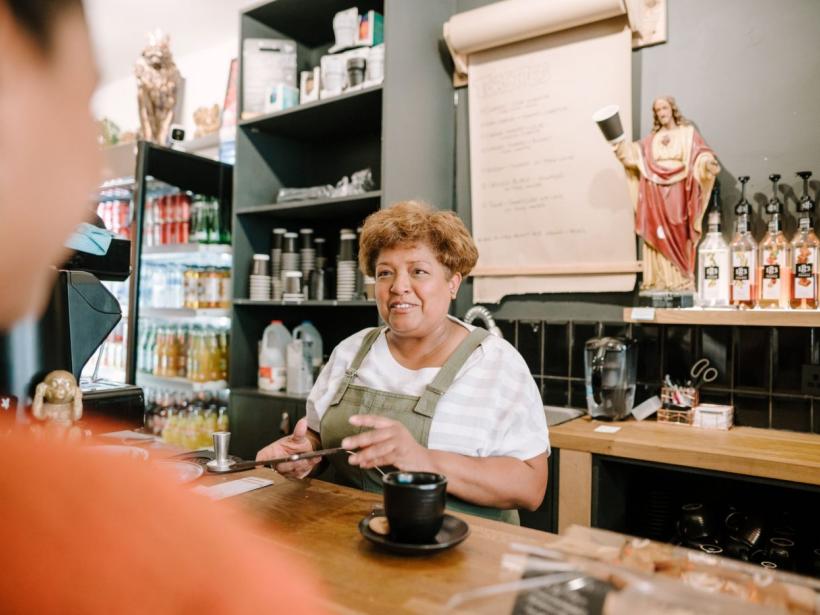
Chatting with a barista or a newsagent gives you the street-level knowledge that never appears in official statistics. Keep the tone casual, as if you are just getting to know the area, and most people will share frank observations without feeling put on the spot.
Frame your curiosity around daily life rather than crime. The right questions uncover patterns of noise, seasonal shifts and which corners feel less comfortable after dark.
- Is this street quiet at night or do things pick up after ten? A barista near your potential flat knows the evening rhythm better than anyone.
- Are there any streets around here where you would not let your own kids walk alone? This question draws on protective instinct and often gets the most direct local knowledge.
- How does the neighbourhood change in August when everyone goes on holiday? Empty streets can feel less secure, and a newsagent will tell you if the area becomes a ghost town.
- Have you noticed any problems with noise from the piazza or the school in the mornings? It sounds like a complaint about sleep, but the answer also hints at foot traffic and who hangs around.
- If your cousin were moving here tomorrow, which block would you tell her to look at first? Shifting the focus to a specific recommendation gets past polite generalities.
- Is there a neighbourhood WhatsApp group or a local Facebook page for residents? A neighbour can point you to the online space where real-time chatter about break-ins or suspicious activity happens.
What are the red flags when viewing a rental property?

A viewing tells you more about actual security than any online listing. Walk slowly and look at the small details that a rushed landlord hopes you will miss. The entrance door is the first honest signal: a single solid door with a quality lock is normal, but a door with two or three extra deadbolts often hints at a past break-in that made a previous tenant nervous.
Pay attention to how the caretaker or landlord handles your questions. A person who becomes vague when you ask about theft in the building, or who quickly changes the subject to the new bathroom, is hiding something. Be wary of any agent who insists on showing the flat only after dark. Natural light shows damp, cracked window frames and a clear view of the street; a landlord who avoids it may be hiding something about the neighbourhood.
- Multiple extra locks or a reinforced door frame on an otherwise ordinary flat, suggesting a history of break-ins.
- Ground-floor windows without bars or proper locks, especially when they face a quiet lane or an unlit courtyard.
- A caretaker who cannot name the last time the building entry system was updated or who shrugs off questions about security.
- An intercom that is broken or a main street door that stays propped open with a rock during the day.
- A landlord who pressures you to decide quickly and refuses a second viewing in daylight.
- Mail piled up in the lobby, a sign that residents come and go frequently and nobody takes responsibility for the common areas.
How does safety change with the seasons in Italy?

A neighbourhood that feels sleepy and secure in August can change noticeably by November. Many Italian cities empty out in Ferragosto, the peak summer holiday, leaving residential streets unusually quiet. When locals return and shorter days set in, the rhythm of the area changes and dimly lit corners that felt harmless in summer can feel less inviting.
Tourist crowds bring their own safety layer. Pickpocketing and bag snatching rise sharply in high season around major attractions, train stations and busy piazzas. A street that seems perfectly safe on a crowded June afternoon may have a different character in low season when fewer eyes are on the pavement.
A winter visit reveals more about permanent residents. You see who actually lives on the street after dark, whether neighbours greet each other and how well entryways are lit. Cold months also test a council's upkeep: broken streetlights and uncollected rubbish are more obvious and tell you how responsive local services are year round.
Are there any online tools or local groups that help?
Community Facebook groups and neighbourhood WhatsApp alerts give you a real-time sense of local sentiment that official statistics cannot capture. Search for groups named after the suburb or quartiere, such as "Sei di Monteverde se" in Rome or "Noi che abitiamo in zona Solari" in Milan. Watch how residents talk about noise, break-ins, or suspicious activity, and note the tone of the replies. A street where neighbours quickly share photos of a lost dog or offer spare vegetables is usually a street where people look out for each other.
Expat forums on sites like Expat.com and the Italy sections of Reddit are useful for comparing neighbourhoods through a foreigner's eyes. Threads often cover practical safety questions, from which train stations feel sketchy after dark to whether a certain viale is fine for a woman walking alone. The value is in the details, not the headlines. One person's "sketchy" is another's "lively", so read several threads and look for patterns rather than single opinions.
Treat all these sources as a supplement, never a substitute. A Facebook group can amplify a single incident into a panic, while a quiet group may simply mean the residents prefer to chat over coffee rather than online. Use the chatter to build a list of specific streets or blocks to walk yourself, ideally on a weekday evening and again on a weekend night, before you sign any lease.
Frequently asked questions
Is it safe to live near a train station in Italy?
It depends entirely on the city and the specific station. Larger hubs like Termini in Rome or Centrale in Milan have a constant flow of people and a visible police presence, but the immediate surrounding streets can attract petty crime. A small-town station is often perfectly quiet. Walk the area at 9 pm to see how it feels.
Should I avoid ground-floor apartments for safety reasons?
Not automatically. A ground-floor flat on a busy, well-lit street with a secure grille and internal shutters can be safer than a top-floor unit in a neglected building with no secure entry door. Check the quality of the window locks and ask about the building's history.
How do I know if a neighbourhood is loud rather than unsafe?
Noise and safety are often confused by newcomers. A piazza full of students talking until late is a sign of life, not danger. Look for signs of real neglect, such as broken streetlights left unrepaired for weeks, or a row of shops that have all been boarded up, rather than just audible social life.
Photo: Centre for Ageing Better, Pexels (Pexels License)