

Here's the thing about "cheapest places to travel" lists. They rank countries, not trips. Inside almost every budget-friendly country, there's a second, invisible price list built just for tourists. It often runs two to four times higher than what locals pay for the same thing.
Vietnam gets ranked as one of the world's best value destinations. For locals, and for anyone who eats where locals eat, that's true. Ho Chi Minh City offers street food for a dollar or two, and modern apartments run $300 to $500 a month. Real, sourced figures. Walk two blocks toward a tourist strip in the same city, though, order that same dish at a restaurant with an English menu, and you're often paying five times the street price for something barely different.
That gap is the real budget killer on a cheap-country trip. Not the country. The tier you accidentally book into. If you want a broader set of ways to stretch a travel budget beyond just picking a cheap destination, our budget travel tips guide covers the rest of it.
What the cost indexes actually measure
Most "cheapest destinations" content pulls from cost-of-living indexes built for expats and remote workers, not week-long travelers. A 2026 travel-specific cost index puts things in sharper focus. Backpacker-style budget travel runs $20 to $35 a day across countries like India, Nepal, Bolivia, Vietnam, and Guatemala. A mid-range trip through most of Asia and Latin America lands closer to $60 to $120 a day. Western Europe, the US, and the Nordics sit at $150 to $300.
That's a wide gap between "budget" and "mid-range" inside the same country. It has almost nothing to do with which country you picked. It's about which price tier you're operating in once you land.
Why the same country can cost $25 a day or $90 a day
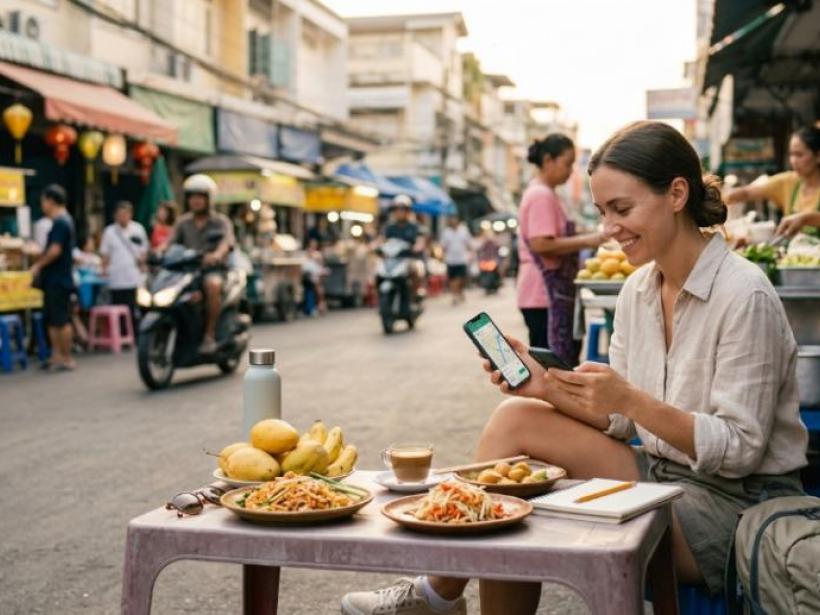
Two travelers can visit Hanoi the same week and report completely different budgets, and both would be telling the truth. One eats at plastic-stool street stalls, takes local buses, books guesthouses through word of mouth. The other eats at restaurants aimed at foreigners, books through international platforms that quietly mark up local listings, takes private transport because it feels safer or easier.
Neither is wrong. But if you're planning around a number from a "cheapest countries" list, you're budgeting for the first traveler while probably living like the second.
A practical fix: for your first two days in any budget destination, price-check the same meal or short taxi ride two ways. Once through an app aimed at tourists, once by asking a local (a guesthouse owner, a shop clerk) what they'd expect to pay. The spread tells you more about your real trip cost than any index number will.
The countries where the markup gap is smallest
Some destinations keep this gap tight, and that matters more than raw cheapness. Georgia is Europe's most underrated budget destination right now. Low flat tax rate, a fast-growing digital nomad scene, pricing that hasn't yet split hard into a tourist tier the way, say, Bali's has. Sri Lanka, Egypt, and India currently rank as the cheapest countries globally on broader cost-of-living data, and if Sri Lanka is on your list, it's worth knowing that ranking measures resident life, not the tourist-markup gap specifically.
The pattern worth remembering: newer or less-hyped destinations tend to have smaller gaps between what locals and visitors pay. The infrastructure for overcharging tourists (English menus, foreigner-only pricing, tour-desk markups) hasn't fully built out yet. That window closes as a place gets popular, which is its own argument for going now instead of waiting.
A quick way to sanity-check any "cheap destination" claim
Before trusting a daily budget figure from any list, including this one, ask what it assumes. A $25/day figure usually assumes local food, shared or budget rooms, public transport. Eating like a resident. A $90/day figure for the same country usually assumes tourist restaurants, private transport, activities booked through international platforms. Same destination, wildly different experience. The country's reputation for being "cheap" barely explains either number.
FAQ
Is Vietnam still cheap in 2026?
Yes, if you eat and travel the way locals do. Street food and local transport stay genuinely low cost. Tourist-zone restaurants and private tours cost meaningfully more, sometimes close to what you'd pay in a mid-range European city.
Which cheap countries have the smallest tourist markup right now?
Georgia and parts of the Balkans currently show a smaller gap between local and tourist pricing than more established budget destinations like Thailand or Bali. Mostly because tourism infrastructure there is younger.
Does a lower cost-of-living ranking mean cheaper travel?
Not directly. Cost-of-living indexes measure what residents pay to live somewhere long term. A travel-specific cost index, one that separates backpacker, mid-range, and luxury pricing, is a better guide for a short trip.
Pick the destination for the experience you actually want. Then budget for the price tier you're realistically going to travel in, not the one a list assumed for you.